Hotel design company in Vietnam: H2 Architects
H2 Architects is a hotel design company in Vietnam offering architecture, interior and landscape design for hotel and hospitality projects. This guide introduces the practice, its WGA and VMARK awards, design approach and the information investors need to start a project.


H2 approaches each hotel through its site, guest profile and operating brief. The team studies the relationship between architecture, interiors, landscape and daily service requirements, developing proposals from concept to the agreed technical documentation. The aim is to give investors a coherent basis for comparing design decisions and coordinating the next stages of their project.
H2 combines local cultural references with contemporary architecture to create a distinct identity for each hotel. Comfort, carefully resolved details and environmental considerations guide the relationship between guest rooms, shared spaces and the landscape. Consultation, project planning, detailed design and support during implementation can be coordinated within the agreed commission.
About H2 Architects: company profile
Review the company profile presented on H2’s Ho Chi Minh City hotel design page to learn more about the practice and its capabilities. The original profile materials are available through that public page.
Selected hotel and apartment projects
H2’s hotel and apartment portfolio brings together project references for investors considering a new commission. Compare each reference with your own site’s scale, guest profile and required services, then ask the team to explain the relevant design scope and project stage.
Watch the hotel design presentation shared in H2’s Ho Chi Minh City guide.
An award-winning hotel design company in Vietnam
H2 Architects was established in 2014 in Ho Chi Minh City. Led by architects Ho Viet Hung and Phi Thi Thuy Ha, the practice brings together architecture, interiors and landscape design. Its approach combines the client’s operating brief with biophilic design, exploration of architectural form and AI-assisted concept development.
For a hotel investor, a design portfolio is most useful when it shows how a proposal responds to its site, guest profile and service model. H2’s published awards provide references that can be reviewed alongside the scope of work, design drawings and coordination process proposed for your project.
WGA Gold Winner — Wonder Global Design Award 2026 S1
H2 Architects received the Gold Winner distinction at the Wonder Global Design Award 2026 S1 for Sand Dune Retreat. The recognition adds to the project’s VMARK Gold award and to H2’s portfolio of hospitality design concepts.
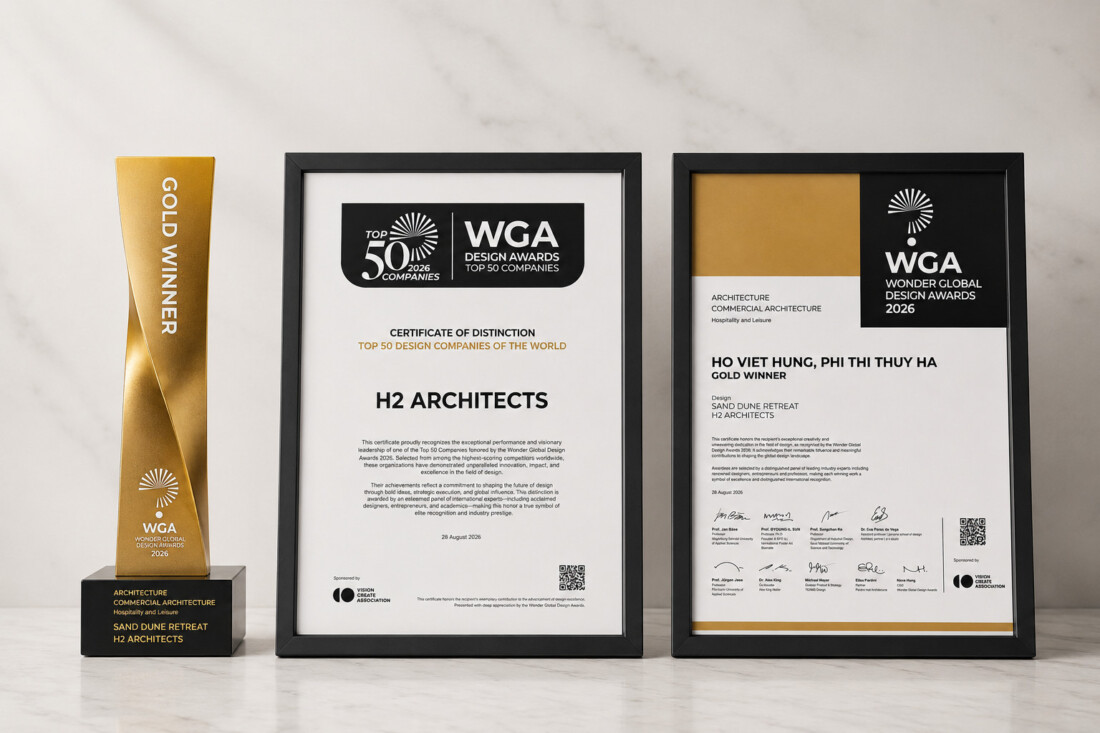
View the Sand Dune Retreat winner profile on Wonder Global Awards and H2’s WGA 2026 S1 announcement.
VMARK Vietnam Design Award 2026: Gold and Silver
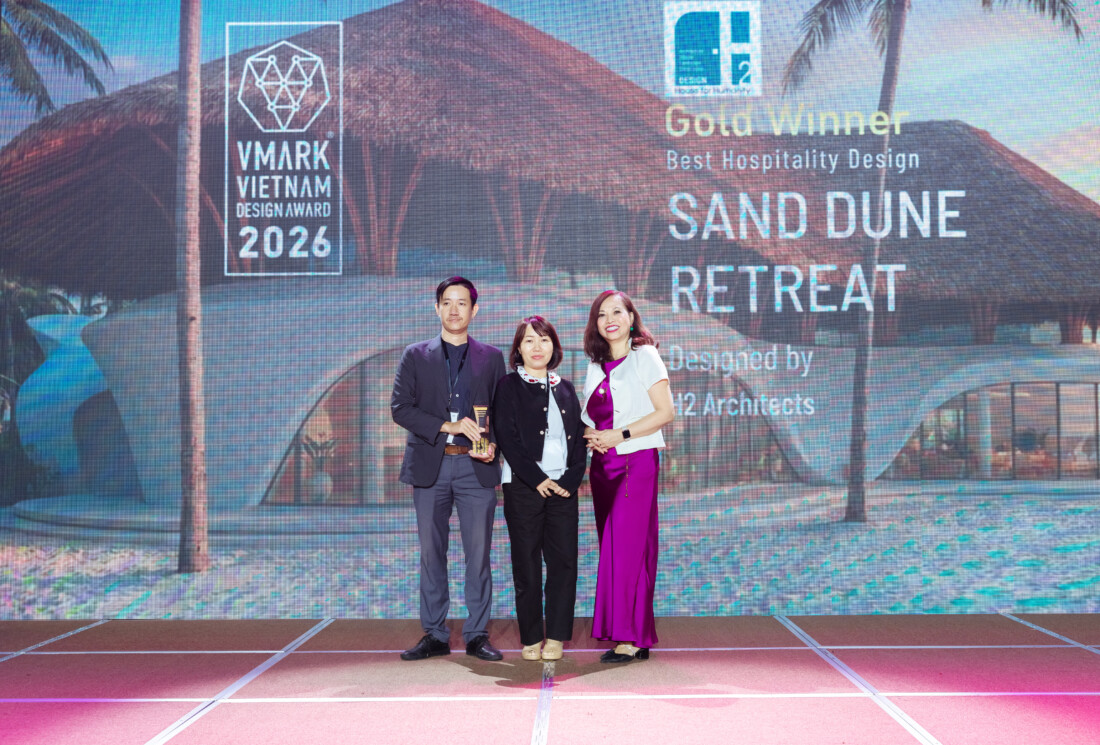
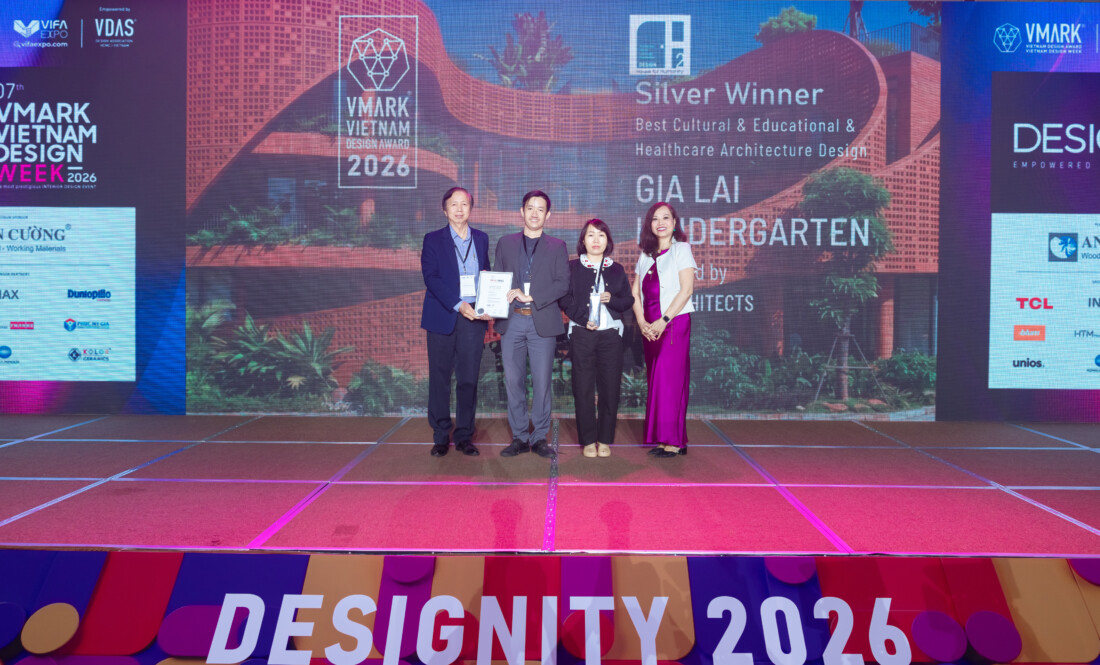
Sand Dune Retreat received Gold at the VMARK Vietnam Design Award 2026, while Gia Lai Kindergarten received Silver. Sand Dune Retreat is the hospitality reference; Gia Lai Kindergarten illustrates the practice’s work in educational architecture.
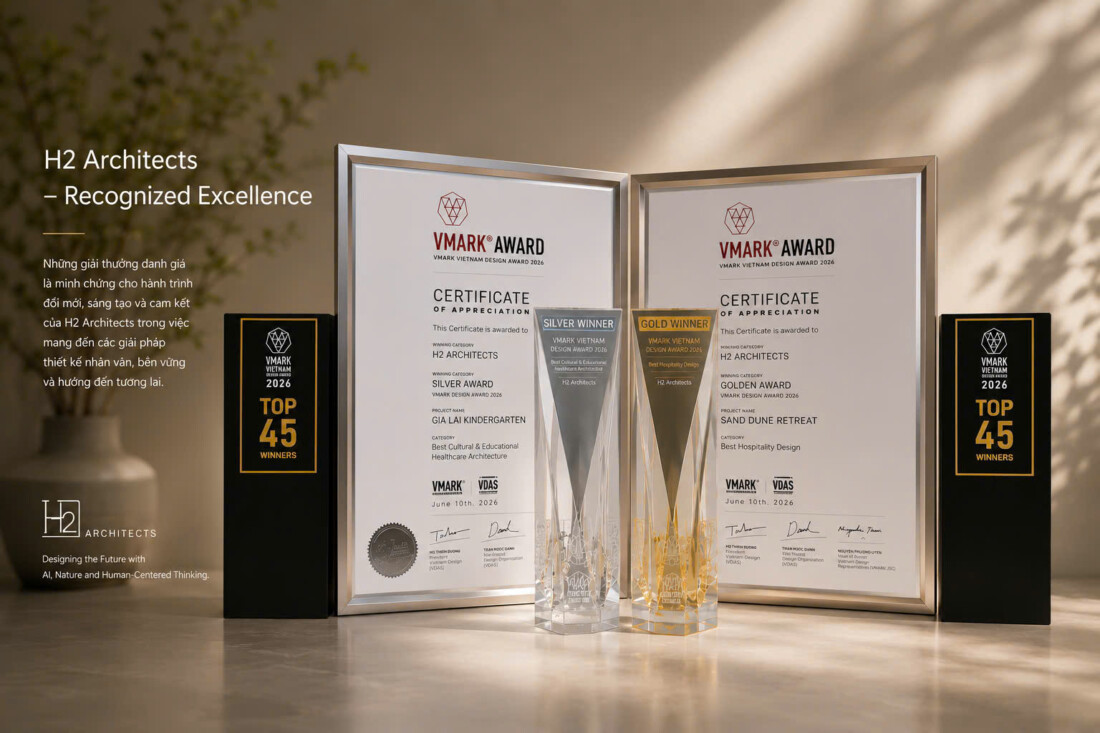
Explore the official project profiles for Sand Dune Retreat and Gia Lai Kindergarten, or read H2’s account of the VMARK awards.
H2 Architects in international architecture publications
Alongside its awards, H2 presents published project references on international architecture platforms. These features offer another way to explore the practice’s approach to form, landscape and the experience of the people using a building.
Architizer: Gia Lai Kindergarten and Dam Bri Homestay
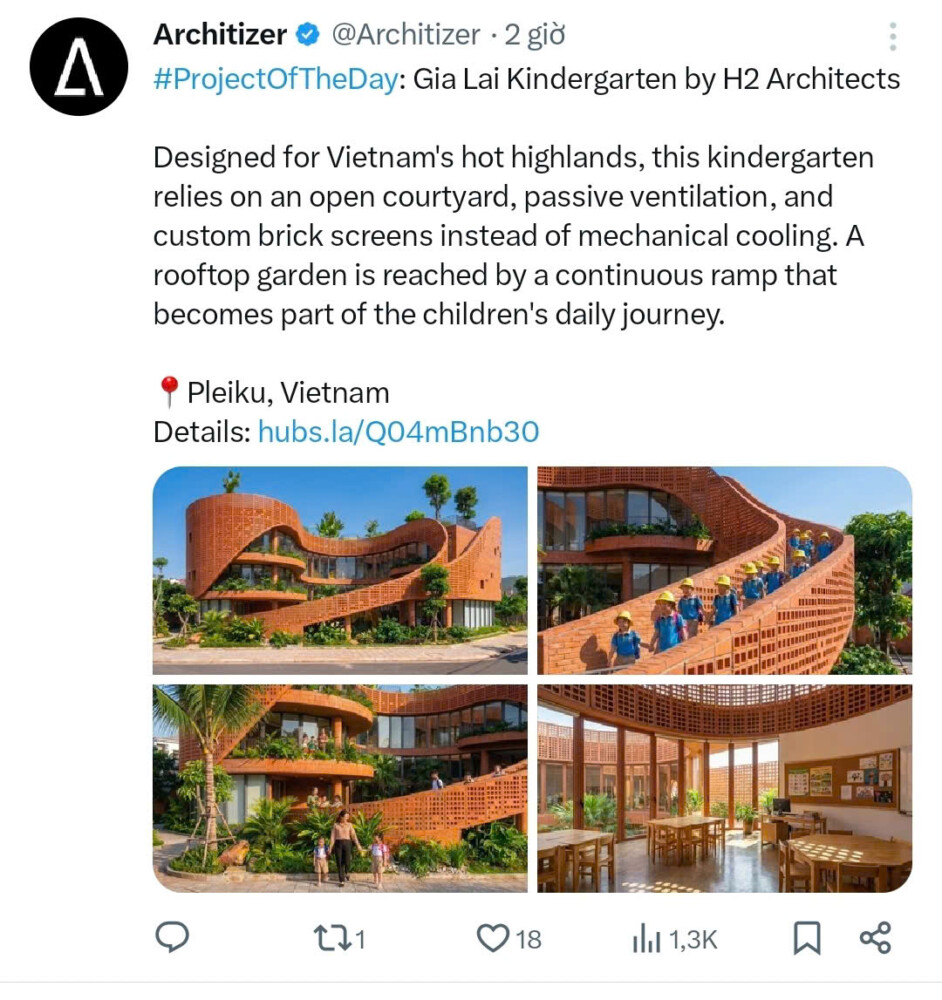
Gia Lai Kindergarten by H2 Architects is published on Architizer; H2 also shares the platform’s “Project of the Day” presentation of the project. Although the kindergarten is an educational project, it provides a reference for the practice’s integration of greenery, circulation and expressive building forms.
Dam Bri Homestay by H2 Architects is another published hospitality reference on Architizer. Its project listing identifies it as a concept, allowing investors to review the design direction at that stage.
TECTURE MAG: Gia Lai Kindergarten
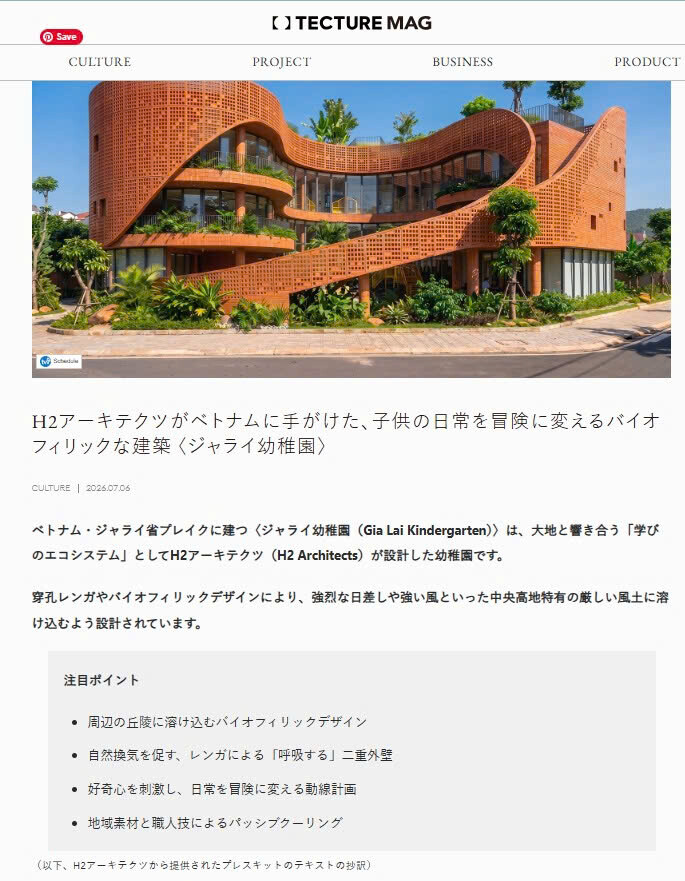
H2’s publication coverage also includes Gia Lai Kindergarten on the Japanese architecture and design platform TECTURE MAG. The feature provides an additional international presentation of the project.
The architects behind H2’s hotel design approach
Hotel design connects architecture with the daily work of running a hospitality business. Room layouts, public areas and service routes need to support the intended guest experience and the owner’s operating model. H2 combines its architects’ experience with digital design tools to study these relationships from the early planning stages.
Ho Viet Hung and Phi Thi Thuy Ha
The practice is led by architects Ho Viet Hung and Phi Thi Thuy Ha. H2’s published company introduction describes their backgrounds as including nearly twenty years of experience with international architecture groups. Their hotel design approach brings together space planning, hospitality requirements and the coordination needed to develop a project beyond its initial concept.
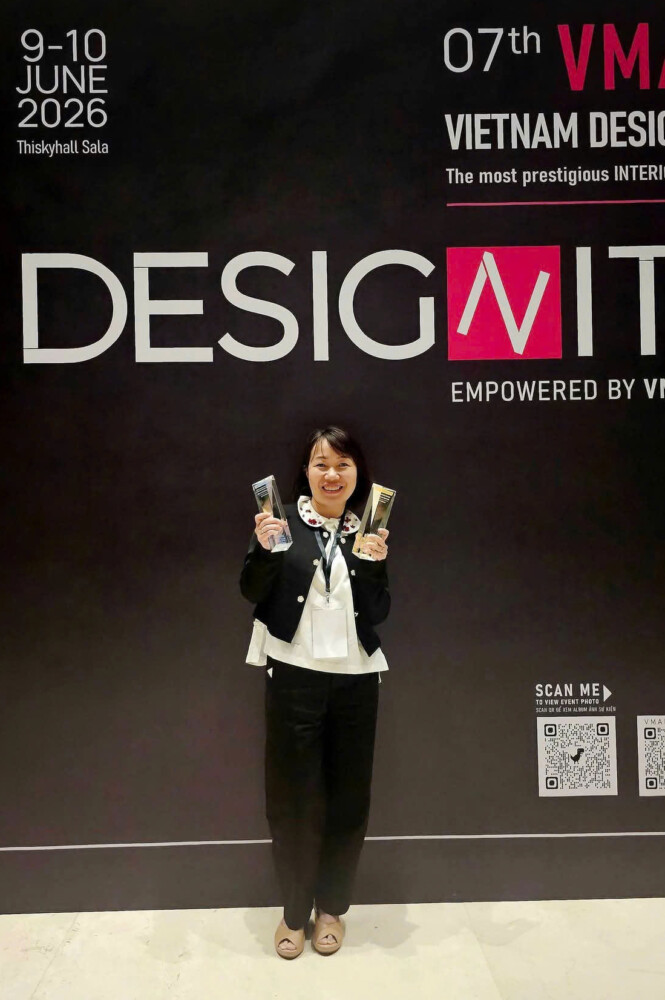
Watch the accompanying architecture presentation shared by H2.
AI-assisted exploration, biophilic design and architectural form
H2 uses AI-assisted exploration within its creative process to develop and compare design directions. The approach described in its hotel design guide focuses on:
- Concept development: exploring biophilic, futuristic and parametric forms, including relationships between greenery, daylight and the building envelope.
- Guest-specific spaces: adapting the atmosphere, room mix and shared facilities to the intended customer segment.
- Materials and construction: comparing material choices and construction implications while the design can still be adjusted.
These explorations are developed through architectural review, technical documentation and coordination. Fire safety, building services, maintenance and construction requirements belong in that process alongside visual identity. The objective is a hotel whose design supports its brand and can be carried through into practical, long-term use.
Selected hotel design concepts by H2 Architects
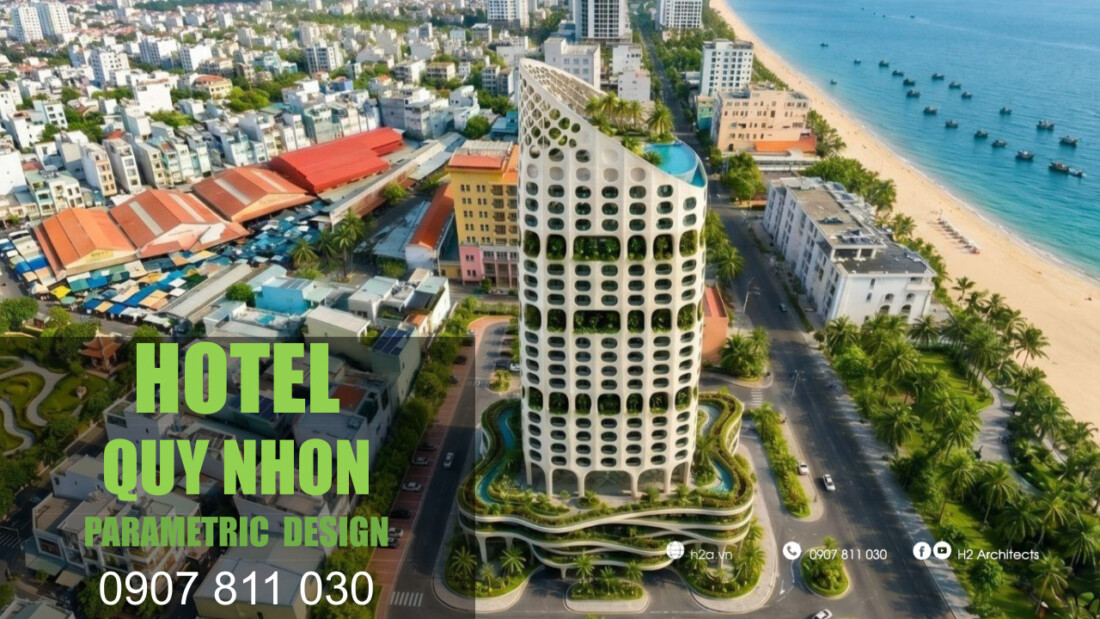
The Quy Nhon Boutique Hotel concept explores a tower with rounded facade openings, planted terraces and a rooftop pool. It illustrates how H2 studies the relationship between a recognizable building form and the guest experience. The image is a design visualization; specifications and construction details are developed through the subsequent design stages.
For a new project, the same design questions should be tested against the actual plot, orientation, room layout, maintenance access and investment brief. Browse H2’s hotel design services and portfolio for further project references.
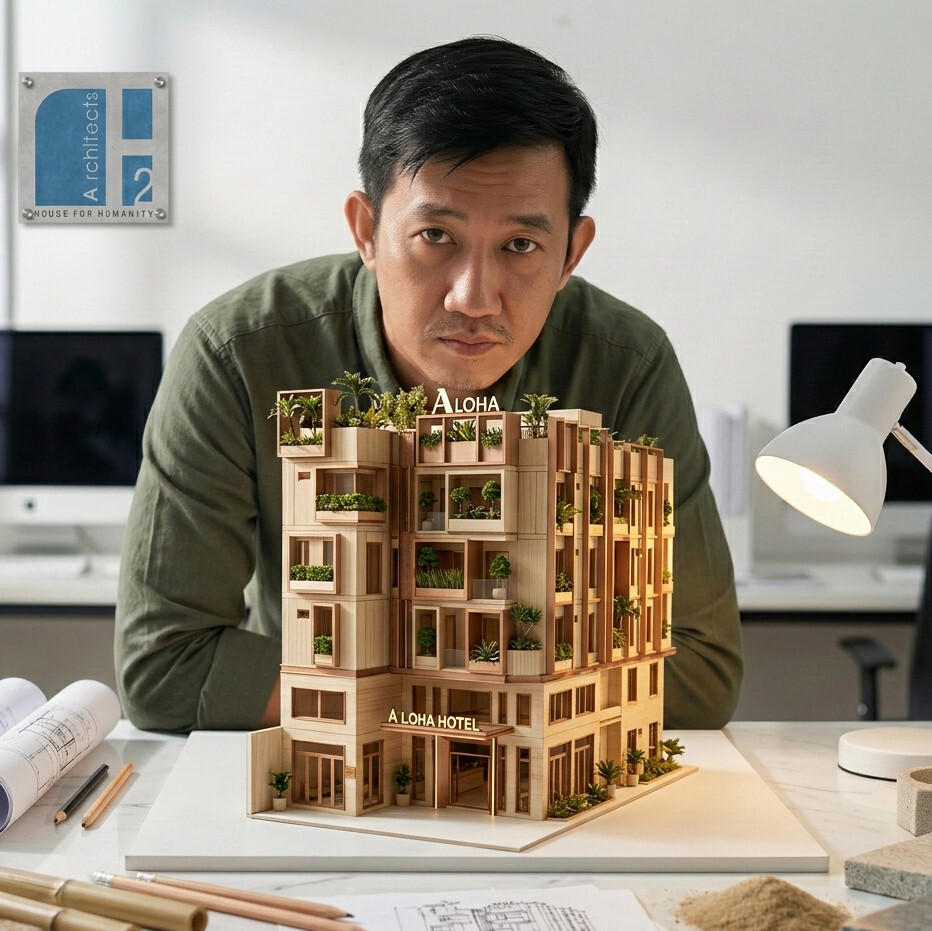
ALOHA HOTEL
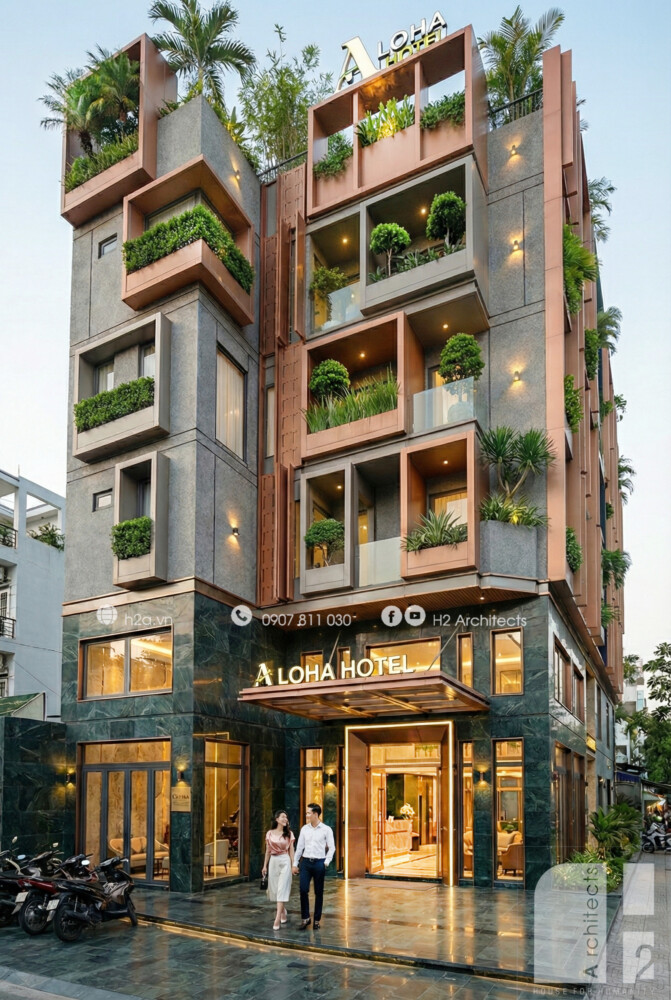
The ALOHA HOTEL illustration presents a compact hotel with a composition of rectangular volumes, planted balconies and a defined entrance. It offers another reference for discussing how the facade, planting and arrival experience can work together on an urban site.
Why work with a hotel design company in Vietnam?

When running a hotel business, hiring an architect for design is a crucial strategic decision. Here are the main reasons:
Create Unique Characteristics: Architects have the ability to design unique and attractive spaces, creating a distinction for your hotel in a competitive area.
Optimize Space: The experience of architects helps optimize space to create comfort and convenience for customers, which is very important in the hotel industry.
Compliance with Building Regulations: Architects are well-versed in local building and legal regulations, helping you ensure that your hotel complies with all regulations, thus avoiding legal issues.
Increase Property Value: An impressive design not only attracts guests but also increases property value, providing long-term profits for the business.
Ensure Construction Quality: Architects will coordinate with contractors and ensure that the project is executed according to the design, thus avoiding quality issues and saving costs.
A clear design brief and coordinated documentation help you assess the trade-offs between guest experience, construction and operation.
Hotel design in Ho Chi Minh City: a seven-storey concept in Tan Binh
In Ho Chi Minh City, a distinctive facade needs to work with the usable floor area and the practical demands of an urban hotel. H2’s seven-storey mini-hotel proposal in Tan Binh illustrates a planted facade with petal-like forms and bronze-toned framing. The two views below show the architectural concept used in the original Ho Chi Minh City guide.


For an investor, the architect’s role includes developing the hotel’s identity, using the plot effectively, coordinating the applicable local requirements and helping contractors interpret the design. These decisions should be tested against the target guests, construction budget and proposed operating arrangements.
Hospitality-development discussion featuring Pham Le Tri Dung, shared in H2’s Ho Chi Minh City hotel design guide.
Why choose H2 Architects?

Established in 2014, H2 Architects brings architecture, interiors and landscape design into the same discussion about a hotel’s identity and operation. Its published company introduction highlights six reasons for investors to consider the practice:
- Design recognition: awards in Vietnam and internationally, including the WGA and VMARK distinctions presented above.
- International experience: a team background and project references described in H2’s profile, with the applicable standards and scope established for each commission.
- Architect-led hotel planning: experienced lead architects coordinating the relationship between the building, guest spaces and service functions.
- A business-led brief: customer positioning and the operating model form the starting point for design decisions.
- A tailored concept: proposals respond to the individual site, investment objectives and brand rather than using a fixed design template.
- Continued design development: a team that explores new tools, technologies and architectural ideas as part of its work.
Explore H2’s design approach in the presentation included in its hotel design guide.
Hotel building permits and completion procedures in Vietnam
Planning the approval and completion process is part of preparing a hotel project. H2’s 2026 guide discusses digital public-service submissions, digital design drawings, urban planning, fire safety and environmental considerations. The actual documentation and submission route need to be checked for the location, scale and characteristics of the proposed development.
Before detailed design begins, identify the responsible consultants, the documents to be prepared and the stages that require review. This makes it easier to coordinate design decisions with the project’s approval programme.
Read H2’s 2026 guide to hotel building permits and completion procedures (in Vietnamese) and discuss the scope relevant to your project with the team.
Hotel design strategy: a book by architect Ho Viet Hung
H2 Architects CEO Ho Viet Hung is the author of Chiến lược thiết kế khách sạn cho chủ đầu tư, a Vietnamese-language book whose title can be rendered in English as Hotel Design Strategy for Investors. It is presented as a resource for owners who need to manage the particular design decisions involved in a hotel project.
The book connects architectural thinking with the investor’s perspective, looking beyond appearance to the relationship between design, revenue opportunities and guest retention. It provides a further introduction to the business questions behind H2’s hotel design approach.

Read H2’s introduction to the book and its author.
Hotel architecture tailored to the site and operating model
A useful brief for a hotel design company in Vietnam starts with the location, target guests, room mix and intended services. A compact city hotel, a coastal property and a retreat on sloping land require different planning decisions. H2 proposes reviewing these conditions before selecting an architectural style or fixing the number of rooms.
City and business hotels
Assess the arrival sequence, reception, lifts, quiet working areas and separation of guest and service routes. For longer stays, discuss luggage storage, desk space, laundry and housekeeping access. On a constrained plot, compare alternative floor plans to understand the trade-offs between room count, comfort and operational space.
Coastal and resort hotels
Study views together with solar exposure, privacy and the maintenance of facades, balconies and landscape. Where a building is exposed to a marine environment, material selection and detailing should reflect the actual site conditions. Restaurants, pools and leisure spaces need supporting storage, servicing and staff routes.
Hotels on sloping or landscape-focused sites
Review surveyed levels, access, drainage and the relationship between accommodation and shared spaces. A scenic view is only one part of the guest journey: luggage movement, weather protection and convenient routes also matter. The scale of gardens and outdoor amenities should be matched to the proposed operating resources.
Risks of poor hotel design

When designing a hotel poorly, you may face serious risks. Here are the top 5 risks:
Unhappy Customers: Poor quality design can lead to uncomfortable experiences for guests, resulting in decreased satisfaction and reduced likelihood of return.
High Maintenance Costs: Design flaws can create costly maintenance issues, thereby increasing operating costs and reducing profits.
Loss of Competitive Edge: Hotels with unimpressive designs will struggle to compete in a highly competitive market, leading customers to choose other competitors.
Legal Risks: Designs that do not comply with building regulations can lead to legal issues, resulting in fines or costly repair demands.
Decreased Property Value: Hotels with poor design will decrease property value, affecting the ability to resell or invest in the future.
Investing in quality design not only provides a great experience for guests but also protects assets and maximizes profits.

Five priorities for hotel architecture and operations
To design an outstanding hotel that leads the market, attention should be paid to the following 5 factors:
Unique Design and Brand Identity: A creative, unique design will create a strong impression, helping the hotel stand out among competitors and easily attract customers. The design should reflect the style and values of the brand.
Optimizing User Experience: Creating a comfortable and convenient space for customers is crucial. An airy space, modern amenities, and reasonable internal traffic will enhance the guests’ experience and encourage them to return.
Sustainability and Environmental Friendliness: Hotels with eco-friendly designs, using renewable materials and energy-saving solutions, will attract environmentally conscious customers while reducing operating costs.
Smart Technology: The application of modern technology such as smart control systems, contactless payment, and automated services will provide a convenient experience and attract modern customers.
Diverse and Flexible Spaces: Hotel design needs to offer a variety of spaces, from meeting areas, restaurants, and spas to outdoor relaxation areas, to meet the diverse needs of various customer groups.
Focusing on these factors will help your hotel lead and excel in the market.

Five hotel design styles to consider in Vietnam
In the hotel architecture industry, choosing the right design style not only elevates the brand but also creates a unique experience for customers. Here are 5 trending hotel design styles that many investors and architects are currently choosing.
Biophilic Design Style (Connecting with Nature)
The Biophilic style focuses on the integration of architecture and nature. Utilizing natural light, greenery, and eco-friendly materials not only helps reduce energy consumption but also provides a relaxing experience, enhancing the health of guests.
Futuristic & Parametric Design Style
This style applies parametric design technology to create unique, flexible, and modern shapes. This type of design often makes a strong impression, attracting young people and international guests who appreciate novelty and creativity.
Neo-Classical Luxury Design Style
The Neo-Classical style brings a luxurious, elegant, and timeless beauty. Intricate decorative details combined with high-quality materials create a classy space, suitable for luxury hotels and high-end resorts.
Modern Localism Design Style
This style blends traditional local architectural elements with modern lines, creating a unique mark and attracting tourists who want to experience local culture through architecture.
Contemporary Minimalism Design Style
Minimalist yet sophisticated, this style focuses on open spaces, quality materials, and natural light. It is a popular choice for many modern hotels due to its flexibility and understated luxury.

Hotel design concepts and architectural references
The following gallery includes neoclassical and contemporary hotel concepts. The organic forms and planted facades are architectural illustrations, not photographs confirming completed buildings. Use them to discuss a design direction before adapting it to the actual site and technical brief.
Three-star hotel design references
Contemporary and futuristic hotel design concepts
Hotel design models in Neoclassical style

KS-TCD-01
KS-TCD-02 KS-TCD-03

KS-TCD-04

KS-TCD-05
Hotel design models in Modern Breakthrough style 
KS-HD-01
KS-HD-02
KS-HD-03
KS-HD-04
KS-HD-05
Hotel drawings and design plans

Hotel concept visualization with arched openings and greenery, included among H2’s design-plan references.
Comparing hotel design companies in Vietnam
The following company references appear in H2’s hotel design guides. Compare the relevance of each firm’s portfolio, proposed scope, design team and contract terms to your own project.
H2A: As an expert in hotel design and construction, with a unique, trendy design style that aligns with modern business trends. H2A develops project-specific design proposals, with the applicable brief, standards and consultant responsibilities to be established for each commission. H2A focuses not only on aesthetics but also on optimizing space, enhancing guest experiences, and increasing the commercial value of hotels.


ATZ Luxury Interior Architecture Joint Stock Company (ATZ Luxury): Established in 2010, ATZ Luxury specializes in interior design and construction for projects such as apartments, villas, townhouses, and offices. With over 13 years of experience in the industry, it has completed many large projects in major cities like Hanoi, Da Nang, and Ho Chi Minh City. ATZ Luxury website

ACI HOME Landscape Architecture and Interior Design LLC: ACI HOME is an architectural brand under Good Hope Construction Investment Joint Stock Company. The company is renowned for its architectural designs in the French and European styles, making it highly suitable for classic or neoclassical hotel projects. It is trusted by many entrepreneurs for designing and constructing villas, houses, and hotels. ACI HOME website
 Green House Vietnam Construction Architecture Company: Green House Vietnam is a company specializing in providing architectural design, interior design, and comprehensive construction services. It has experience in executing over 500 projects nationwide, including hotels and restaurants. Green House Vietnam website

Additional companies referenced in H2’s Ho Chi Minh City guide
The Vietnamese guide also introduces the four companies below. The accompanying interior illustrations are reproduced from that guide as design references; they are not presented as H2 projects.
Diem Nhan Interior
The guide describes Diem Nhan’s approach in terms of contemporary and minimalist interiors, practical layouts, material choices and natural light. Visit Diem Nhan Interior to review the company’s own portfolio and service information.

Morehome
Morehome is included as an interior-design reference covering apartments, villas and hotels, with an emphasis on contemporary, comfortable spaces. See Morehome’s website for its own project and service descriptions.

Kien Thiet Viet
The source guide introduces Kien Thiet Viet as an architecture and construction company with a team of architects and engineers. Explore Kien Thiet Viet for current portfolio and service information.

Decox
Decox is referenced for interior design and decoration, with contemporary, individually developed spaces. Visit Decox Design to assess its own published work.

Planning a hotel project in Vietnam from overseas
If you are coordinating an investment from outside Vietnam, start by sending H2 the site location, available drawings, intended positioning and a short list of priorities. The initial discussion can establish what information is available, which site investigations are needed and what design scope should be proposed.
Agree on the language and format of deliverables, meeting arrangements, approval milestones, site visits and responsibilities in the project proposal. Where a hotel operator or separate engineering consultants are involved, their requirements should be included in the brief and reviewed at the relevant design stages.
A clear record of decisions helps the team compare alternatives and understand the effect of changes before the detailed documentation is issued. The workflow below provides a starting point for discussing those stages with H2.
H2’s hotel design process: three phases and twelve steps
We would like to introduce the 3-phase, 12-step design process of the company for your reference.
Phase 1: Pre-design
1. Information gathering.
2. Consulting on the workflow, advising on suitable design package quotes.
3. Signing contracts, surveying, measuring.
Phase 2: Concept design
4. Analyzing the current situation
– The land (current status, traffic, viewpoints, spatial orientation).
– Climate (lighting, sun direction, wind direction, water bodies).
– Analyzing greenery.
– Analyzing architecture (layout, shapes, materials).
5. Concept design (proposing functions and design styles suitable for the investor’s needs).
6. Floor plan proposals.
7. 3D architectural proposals, 3D interior proposals (if included), 3D garden proposals (if included).
Phase 3: Technical implementation
8. Construction permit drawings (if included)
9. Detailed implementation drawings:
– Architectural part, detailed interior part (if included), detailed garden part (if included)
– Structural part.
– Electrical and plumbing part.
10. Perspective drawings adjusted according to the technical design documents (updating actual construction materials)
11. The lead architect checks the entire file before issuing the construction documents
12. Printing and handing over the documents
Hotel design and classification: reference standards
H2’s guide to hotel design and classification standards in Vietnam
Below are the minimum room scale and bedroom dimensions (including bedroom and bathroom) for 3-star, 4-star, and 5-star hotels, applicable to both Hotel (H) and Resort Hotel (R) types according to TCVN 4391:2015.
Minimum number of guest rooms
| Star Rating | Hotel (H) | Resort Hotel (R) |
|---|---|---|
| 3 star | 50 | 40 |
| 4 star | 80 | 60 |
| 5 star | 100 | 80 |
Data extracted from section “1.3 Minimum Guest Room Scale” of TCVN 4391:2015 TCVN-4391_2015.
Minimum bedroom area
| Star Rating | Single room | Double room/two single beds | Special suite | Premium suite |
|---|---|---|---|---|
| 3 star | 18 m² | 22 m² | – | – |
| 4 star | 21 m² | 25 m² | 41 m² | – |
| 5 star | 24 m² | 32 m² | 56 m² | 100 m² |
The area is taken from section “1.7 Bedroom Area (including bedroom and bathroom)”
Designing for a three-, four- or five-star hotel brief
H2 can develop a hotel brief around an intended three-, four- or five-star positioning, considering room types, public spaces, dining, service areas and the relevant technical requirements. The intended rating should be discussed early so that the room mix and supporting facilities can be coordinated with the operator and project consultants.
Explore H2’s three-, four- and five-star hotel design services.
The design scope can extend from the architectural concept and floor plans to exterior treatment and interiors. Room planning, service functions, investment cost and a consistent visual identity should be considered together. The final classification depends on the completed hotel’s compliance and the relevant assessment process.
Hotel design quotation and payment schedule
A design quotation should define the scope, project stages, deliverables, coordination tasks and review rounds. The payment structure below is the reference published by H2; the applicable terms are those agreed in the individual design contract.
Indicative design fees by project category
H2’s published reference framework relates design fees to the construction value of the relevant package, except where an interior or landscape basis is specified. The project-category ranges are:
- Luxury villas, boutique hotels and premium homestays: 5–7%.
- Three- and four-star hotels: 4–6%.
- Five-star hotels, resorts and complex projects: 6–9%.
- Premium interiors: 10–15%, generally calculated on the interior investment value.
Service scope and reference fee ranges
The service-based breakdown below is also published in H2’s Ho Chi Minh City guide. The applicable fee depends on the size, complexity, intended hotel standard and agreed deliverables.
| Service | Scope of work | Reference fee |
|---|---|---|
| Hotel architectural design |
|
4–8% of construction value |
| Hotel interior design |
|
10–15% of interior investment |
| Design supervision |
|
2–5% of construction value |
| Integrated project management (IPM) |
|
5–8% of construction value |
| Landscape and amenities design |
|
3–6% of landscape value |
The project-category ranges and the service ranges describe different ways of defining a commission. Confirm which services and calculation bases apply in the written proposal; the percentages should not automatically be added together. The individual contract establishes the final scope, fee and payment terms.
Payment in four instalments
The design cost is paid in 4 installments in cash or by bank transfer as follows:
Installment 1: 50% of the contract value (advance payment upon signing the contract)
Installment 2: 20% of the contract value (after both parties agree on the architectural design plan)
Installment 3: 20% of the contract value (after both parties agree on the interior design plan)
Installment 4: The remaining amount (immediately after the technical documents are handed over)
What does the hotel design documentation include?
Detailed architectural design documentation
Includes:
+ Floor plan drawings
+ Elevation drawings
+ Section drawings
+ Detailed architectural drawings
+ Detailed sanitation drawings
+ Detailed door drawings
+ Equipment layout drawings
+ Lighting and ceiling layout drawings
+ Floor tiling layout drawings
Detailed interior design documentation
Includes:
+ Detailed interior drawings of the rooms
+ Detailed equipment drawings
+ Sample furniture drawings
+ Drawings for selecting finishing materials
Detailed structural design documentation
Includes:
+ Foundation, beam, and column layout drawings.
+ Detailed foundation drawings.
+ Detailed beam and column drawings.
+ Beam layout drawings, reinforcement layout for floors, and roofs.
+ Detailed floor and roof beam drawings.
+ Detailed staircase drawings
Detailed electrical design documentation
Includes:
+ Electrical layout drawings for the ground floor and other floors.
+ Schematic diagrams for electrical distribution, stair lighting diagrams.
Detailed plumbing design documentation
Includes:
+ Water supply and drainage drawings for the ground floor and other floors.
+ Detailed water supply and drainage drawings for bathrooms.
+ Spatial diagrams for water supply and drainage.
3D drawings for architecture, interior, and landscaping
Selection of finishing materials for the project
Hotel design and construction coordination
H2 provides hotel design and construction services. Discuss whether your commission requires design documentation only or additional construction and site coordination. Responsibilities for contractor selection, material samples, design changes and site reviews should be clearly defined in the agreed scope.
A coordinated design-and-build commission can cover the architectural concept, shell construction, finishes and interiors. Linking these stages helps the owner track the relationship between design intent, construction quality, programme and budget. Agree the contractor responsibilities, quality reviews and handover requirements at the outset, including any work required for the hotel’s intended classification.
Frequently asked questions about hotel design in Vietnam
What services can H2 Architects provide for a hotel project?
H2’s hotel design services cover architectural planning, interior design and landscape design. The agreed scope may include concept development, 3D visualizations, technical documentation and coordination with the relevant consultants. Construction-related services and site involvement should be defined in the project proposal.
Which international awards has H2 Architects received?
Sand Dune Retreat received Gold Winner recognition at WGA — Wonder Global Design Award 2026 S1 and Gold at VMARK Vietnam Design Award 2026. Gia Lai Kindergarten received VMARK Silver in 2026. The official project references and award images are linked above.
What should I send before requesting a hotel design quotation?
Send the site location, plot dimensions, available survey or existing-building drawings, intended hotel positioning, approximate room count, required facilities, budget range and desired programme. These inputs help H2 identify the design tasks and prepare a scope for discussion.
How are hotel design fees and timelines determined?
They depend on the project size, site constraints, design scope, coordination needs and expected deliverables. A new build and a renovation may require different investigations. Ask for a written proposal that defines the stages, review rounds, exclusions, payment milestones and proposed schedule.
Can an international investor begin the discussion remotely?
You can send an initial brief by email or through H2’s contact page. Include your location and preferred meeting times so the team can propose suitable next steps. The working language, site coordination and deliverable requirements should be agreed before the design commission begins.
Contact H2 Architects about your hotel project in Vietnam
Looking for a hotel design company in Vietnam? Share your project location, intended scale and design priorities with H2 Architects. The team can review your brief and discuss a suitable scope for architecture, interiors and landscape design.
Discuss your hotel project with H2 Architects
H2 Architects / H2A
Office: Shophouse E1.18, Ruby, Celadon City, Tan Thang Street, Tan Son Nhi Ward, Ho Chi Minh City, Vietnam.
Phone: +84 907 811 030 · +84 327 011 030
Email: h2achitects@gmail.com
Website: H2 Architects
Social: H2 Architects on Facebook · H2 Architects on YouTube
Legal company name: CÔNG TY TNHH THIẾT KẾ XÂY DỰNG THƯƠNG MẠI DỊCH VỤ H2A.
Company address published in H2’s profile: 417 C8 Street, Tay Thanh Ward, Ho Chi Minh City, Vietnam.
Tax identification number: 0312801326.
Đừng quên like và chia sẻ cho mọi người nếu thấy bài viết này hay nhé !